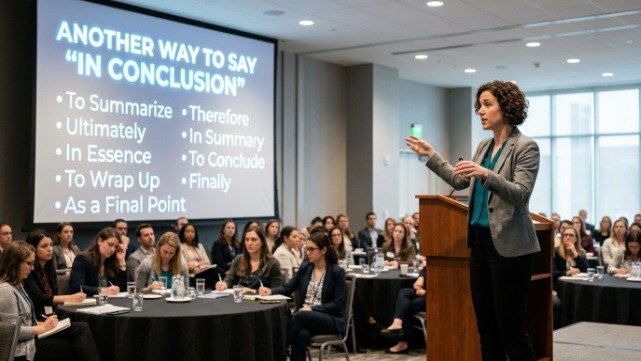
The words “in conclusion” are useful, but using them again and again can make your writing sound repetitive.If you’re writing an essay, email, blog post, speech, report, or presentation, choosing a fresh closing phrase can make your message stronger and more professional.
The good news is that there are many better ways to end your writing. Some sound formal, while others feel friendly, persuasive, or creative. The right phrase depends on your audience and the purpose of your message.
In this guide, you’ll discover another way to say in conclusion for different situations, along with practical examples and tips to help you end every piece of writing with confidence.
Formal Alternatives to Another Way to Say In Conclusion
Formal writing often needs a polished and professional ending. These alternatives work well for essays, research papers, reports, and business documents.
- To summarize
- To sum up
- In summary
- To conclude
- In closing
- Overall
- Ultimately
- All things considered
- Taking everything into account
- In the final analysis
- On the whole
- As a final point
- In essence
- In brief
- To wrap up
- As demonstrated above
- Based on the evidence
- As discussed
- Considering all factors
- The bottom line is
- Therefore
- Hence
- Consequently
- It is clear that
- In light of these points
Another Way to Say In Conclusion for Essays and Academic Writing
Students often need alternatives that sound natural while keeping an academic tone.
- Overall
- To summarize the discussion
- In summary
- As a result
- Therefore
- Ultimately
- Based on this analysis
- It can be concluded that
- The evidence suggests
- In the end
- Looking at the facts
- From this discussion
- As shown above
- Given these findings
- This demonstrates that
- The final takeaway is
- Considering the evidence
- This proves that
- The key point is
- All in all
- To bring everything together
- As a closing thought
- In short
- From this perspective
- The main lesson is
Creative and Friendly Ways to End Your Writing
If you’re writing blogs, social media posts, newsletters, or personal content, these alternatives feel warmer and more engaging.
- That’s the big picture
- Here’s the takeaway
- The final thought
- Let’s wrap things up
- Before we finish
- One last thing
- Here’s what matters most
- The key message
- The main idea
- At the end of the day
- That’s all there is to it
- The important thing to remember
- Keep this in mind
- That’s the bottom line
- It all comes down to this
- Think about this
- Here’s the final tip
- One final reminder
- Don’t forget
- Remember this
- Here’s the simple answer
- That’s the conclusion
- Leave with this thought
- That’s my final point
- Thanks for reading
Another Way to Say In Conclusion for Business Emails and Professional Communication
When writing business emails, reports, proposals, or workplace messages, your closing should sound confident and professional. These alternatives help you finish with clarity while leaving a positive impression.
- To recap
- To summarize our discussion
- As a final note
- Moving forward
- With that in mind
- In closing
- To conclude
- In summary
- Overall
- As discussed
- Based on the information above
- The key takeaway is
- Going forward
- Looking ahead
- With these points in mind
- The final recommendation is
- Therefore
- Ultimately
- In light of these findings
- To bring everything together
- The next step is
- Thank you for your time
- We appreciate your consideration
- I look forward to your response
- Together, we can move forward
Another Way to Say In Conclusion for Speeches and Presentations
A strong ending helps your audience remember your message. These phrases are perfect for presentations, public speaking, and seminars.
- As we finish today
- Before I close
- Let me leave you with this
- The final message is
- As we conclude
- One final thought
- Remember this
- The biggest takeaway is
- Let’s wrap this up
- In closing
- To summarize
- Thank you for listening
- I hope this inspires you
- Together, we can make a difference
- Let’s move forward with confidence
- Keep this idea in mind
- The future starts today
- Every small step counts
- Let’s put these ideas into action
- This is only the beginning
- Your next step matters
- Make today count
- Believe in your ability
- Thank you for your attention
- Let’s end on a positive note
Another Way to Say In Conclusion for Everyday Conversations
You don’t always need formal words when ending a conversation. These alternatives sound natural in daily chats with friends, family, or coworkers.
- So that’s it
- That’s the whole story
- Anyway
- Long story short
- That’s my point
- That’s what I think
- That’s all for now
- At the end of the day
- That’s how it is
- In the end
- That’s everything
- The main thing is
- That’s what matters
- So yeah
- That’s about it
- That’s my final thought
- That’s the takeaway
- That’s the important part
- Hope that helps
- Keep that in mind
- That’s all I wanted to say
- Thanks for hearing me out
- Let’s leave it there
- That’s where I stand
- We’ll see what happens
Another Way to Say In Conclusion for Blogs, Articles, and Content Writing
Blog posts and online articles should end with a memorable closing that encourages readers to think or take action. These alternatives make your content more engaging.
- The final takeaway
- Here’s what we’ve learned
- Let’s review the key points
- Here’s the bottom line
- The key lesson is
- What’s most important is
- Let’s finish with this
- Before you go
- Keep these tips in mind
- Start applying these ideas today
- Remember the basics
- Your next step is simple
- Now it’s your turn
- Try these ideas yourself
- Put these tips into practice
- Don’t be afraid to experiment
- Small changes make a big difference
- Keep learning every day
- Thanks for reading
- We hope this guide helped
- Share your thoughts below
- Save this guide for later
- Explore our related articles
- Continue improving your skills
- See you in the next guide
Short Alternatives to In Conclusion
Sometimes you only need a quick phrase to end your writing.
- Overall
- Finally
- In short
- To sum up
- In summary
- Simply put
- In brief
- Ultimately
- Therefore
- Hence
- So
- Thus
- In closing
- All in all
- To conclude
- Bottom line
- In the end
- Final thought
- Last point
- That’s it
- In essence
- To wrap up
Tips for Using Alternatives to In Conclusion
Match the tone
Choose a formal phrase for professional writing and a relaxed phrase for blogs or conversations.
Avoid repeating the same ending
Using different closing phrases keeps your writing fresh and interesting.
Keep it natural
Pick an ending that flows smoothly with the rest of your content.
Stay clear
Your closing sentence should remind readers of your main point without adding new information.
Think about your audience
Academic readers expect formal language, while friends or online readers may prefer casual wording.
Conclusion
Finding another way to say in conclusion can instantly improve your writing.If you’re finishing an essay, business report, email, speech, or blog post, using a fresh closing phrase makes your message sound more natural and engaging.
Try different alternatives based on the situation, your audience, and your personal writing style. Which closing phrase do you use the most? Experiment with a few new ones and see how much stronger your writing becomes.
Discover More Article
- 🚀 Another Way to Say Emphasize: Professional, Creative, and Simple Alternatives (2026)
- 🚀 Another Way to Say Highlights for Emails, Reports, and Everyday Writing (2026)
- 🔥 Another Way to Say Impact: Smart Alternatives That Make Your Writing Stronger (2026)

I am Rudyard Kipling, a passionate writer with 7 years of experience. I create engaging content on English grammar, writing tips, and unique language insights. Through my website, othirway.com, I aim to help readers improve their writing skills and explore creative ways to express themselves effectively.