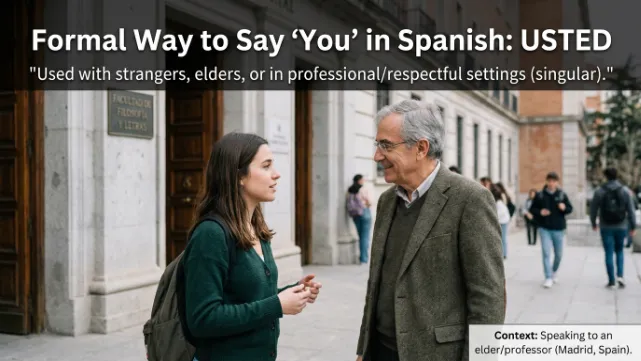
Learning the formal way to say you in Spanish is one of the first steps toward speaking politely and making a good impression. While “Spanish” has different ways to say you, choosing the correct one depends on the situation, the person’s age, your relationship, and the country.
Using the formal form shows respect, professionalism, and good manners. If you’re talking to a teacher, customer, doctor, boss, or someone you just met, knowing when to use formal “Spanish” can help you communicate naturally and avoid awkward mistakes.
This guide explains the formal way to say you in “Spanish“, when to use it, and gives plenty of practical examples you can use in everyday conversations.
What Is the Formal Way to Say You in Spanish?
The most common formal way to say you in Spanish is:
- Usted
For more than one person, the formal version is:
- Ustedes
Unlike the informal pronoun tú, usted shows politeness and respect.
Quick Comparison
| English | Informal | Formal |
| You | Tú | Usted |
| You (Plural) | Vosotros or Ustedes | Ustedes |
Formal Way to Say You in Spanish for Professional Conversations
In business, customer service, interviews, and official settings, using usted is considered respectful.
- ¿Cómo está usted?
- ¿Puede ayudarme?
- ¿Necesita asistencia?
- ¿Desea más información?
- ¿Tiene alguna pregunta?
- ¿Podría repetir eso?
- ¿Le gustaría una copia?
- ¿Está listo?
- ¿Cuál es su nombre?
- ¿Dónde trabaja usted?
- ¿Puede esperar un momento?
- ¿Cómo puedo ayudarle?
- ¿Necesita algo más?
- ¿Quiere continuar?
- ¿Está disponible mañana?
- ¿Podría firmar aquí?
- ¿Ha terminado?
- ¿Tiene tiempo?
- ¿Le interesa este producto?
- ¿Prefiere otra opción?
- ¿Desea hablar con el gerente?
- ¿Puedo acompañarle?
Formal Way to Say You in Spanish When Speaking to Elders or New People
Respect is very important in many Spanish-speaking cultures. Using usted is common when speaking to older adults, strangers, teachers, doctors, or people you have just met.
- ¿Cómo se siente usted?
- ¿Cómo ha estado?
- ¿Necesita ayuda?
- ¿Le puedo ofrecer un asiento?
- ¿Quiere tomar café?
- ¿Tiene familia aquí?
- ¿Dónde vive usted?
- ¿Cómo llegó?
- ¿Está cómodo?
- ¿Le gusta esta ciudad?
- ¿Puede venir mañana?
- ¿Desea descansar?
- ¿Ha visitado este lugar antes?
- ¿Qué piensa usted?
- ¿Está de acuerdo?
- ¿Le gustaría participar?
- ¿Quiere conocer a mi familia?
- ¿Tiene alguna recomendación?
- ¿Cómo puedo servirle?
- ¿Desea esperar aquí?
- ¿Puedo hacerle una pregunta?
- ¿Necesita transporte?
Formal Way to Say You in Spanish with Friendly and Polite Expressions
You can sound warm while still remaining respectful. These expressions work well in many everyday conversations.
- Que tenga un excelente día
- Espero que esté bien
- Me alegra conocerle
- Fue un placer hablar con usted
- Gracias por su tiempo
- Le deseo lo mejor
- Que tenga buen viaje
- Cuídese mucho
- Espero verle pronto
- Le agradezco su ayuda
- Gracias por visitarnos
- Que disfrute su día
- Le envío un cordial saludo
- Siempre es un gusto atenderle
- Espero que todo salga bien
- Gracias por su paciencia
- Le deseo éxito
- Ha sido un honor conocerle
- Espero su respuesta
- Le deseo buena salud
- Gracias por confiar en nosotros
- Que tenga una buena tarde
Formal Way to Say You in Spanish in Business Emails and Workplace Communication
Using usted in business emails and workplace conversations creates a professional and respectful tone. It is the preferred choice when communicating with clients, managers, customers, or colleagues you do not know well.
- Le agradezco su respuesta
- Quedo a su disposición
- Espero su confirmación
- Gracias por su tiempo
- ¿Podría revisar este documento?
- ¿Sería tan amable de responder?
- Le envío el informe solicitado
- Agradecemos su colaboración
- ¿Puede asistir a la reunión?
- Quedamos atentos a su respuesta
- Le deseamos un excelente día
- Fue un placer atenderle
- ¿Necesita más información?
- Estamos para servirle
- Gracias por confiar en nosotros
- Esperamos trabajar con usted
- Le informaremos pronto
- ¿Tiene alguna duda?
- Agradecemos su preferencia
- ¿Podemos ayudarle en algo más?
- Le agradecemos su paciencia
- Esperamos verle nuevamente
Formal Way to Say You in Spanish While Traveling
Travelers often use formal Spanish when speaking with hotel staff, taxi drivers, restaurant employees, or airport workers. It helps create polite and friendly interactions.
- ¿Puede ayudarme?
- ¿Dónde está el hotel?
- ¿Tiene una habitación disponible?
- ¿Puede recomendar un restaurante?
- ¿Cuánto cuesta?
- ¿Acepta tarjeta?
- ¿Puede llamar un taxi?
- ¿Dónde está la estación?
- ¿Me puede indicar el camino?
- ¿Tiene cambio?
- ¿Puede tomar una foto?
- ¿A qué hora abre?
- ¿A qué hora cierra?
- ¿Puede hablar más despacio?
- ¿Tiene un mapa?
- ¿Dónde puedo comprar boletos?
- ¿Puede recomendar un lugar turístico?
- Muchas gracias por su ayuda
- Que tenga un buen día
- Hasta luego
- Buen viaje
- Gracias por su atención
Formal Way to Say You in Spanish for Customer Service
Customer service professionals use formal language to make customers feel respected and valued. These phrases are common in stores, banks, hotels, and service centers.
- Bienvenido
- ¿Cómo puedo ayudarle?
- ¿Qué necesita hoy?
- ¿Busca algo específico?
- ¿Desea realizar una compra?
- ¿Tiene alguna consulta?
- ¿Puedo mostrarle otras opciones?
- Gracias por visitarnos
- Esperamos verle pronto
- Le agradecemos su compra
- ¿Está satisfecho con el servicio?
- ¿Necesita asistencia adicional?
- ¿Puedo resolver su problema?
- Estamos aquí para ayudarle
- Gracias por elegirnos
- Le deseamos un excelente día
- ¿Desea una factura?
- ¿Quiere hablar con un representante?
- Gracias por su paciencia
- Esperamos atenderle nuevamente
- Fue un placer servirle
- Que tenga un buen día
Formal Way to Say You in Spanish for Phone Calls
Phone conversations often begin formally, especially when calling businesses, offices, or someone you have never spoken to before.
- Buenos días
- ¿Con quién tengo el gusto?
- ¿Podría hablar más despacio?
- ¿Me escucha bien?
- ¿Puede repetir eso?
- Gracias por llamar
- Le devuelvo la llamada
- ¿Está disponible?
- ¿Puede esperar un momento?
- Le comunicaré con el departamento correcto
- ¿Tiene alguna pregunta?
- Gracias por su paciencia
- Fue un placer hablar con usted
- Le deseo un buen día
- ¿Necesita algo más?
- Hasta pronto
- Que tenga una buena tarde
- Le contactaré mañana
- Gracias por su tiempo
- Estamos a su disposición
- Hasta luego
- Adiós
Formal Way to Say You in Spanish for Schools and Education
Students and parents commonly use usted when speaking with teachers, principals, professors, and school staff to show courtesy and respect.
- Buenos días profesor
- ¿Puede explicarlo otra vez?
- Gracias por su enseñanza
- ¿Tiene un momento?
- ¿Puede revisar mi tarea?
- ¿Cuál es la fecha del examen?
- Gracias por su ayuda
- ¿Podría recomendar un libro?
- ¿Tiene alguna sugerencia?
- Le agradezco sus comentarios
- ¿Puede firmar este documento?
- ¿Necesita algo de mí?
- Espero aprender mucho de usted
- Fue un gusto conocerle
- Gracias por su paciencia
- ¿Puede aclarar esta duda?
- ¿Hay tarea para mañana?
- Le deseo un excelente día
- Gracias por dedicar su tiempo
- Nos vemos en la próxima clase
- Hasta mañana
- Muchas gracias
Short Formal Way to Say You in Spanish for Quick Conversations
Sometimes you only need a short and polite sentence.
- Usted
- Sí señor
- Sí señora
- Con gusto
- Claro que sí
- Por supuesto
- Gracias
- Muchas gracias
- Permítame
- Disculpe
- Adelante
- Bienvenido
- Encantado
- Buen día
- Buenas tardes
- Buenas noches
- Hasta luego
- Nos vemos
- Que tenga buen día
- Con permiso
- Lo entiendo
- Excelente
Tips for Using the Formal Way to Say You in Spanish
Start Formal First
When meeting someone new, use usted until they invite you to use tú.
Watch the Situation
Professional meetings, hospitals, schools, and government offices usually require formal language.
Listen to Native Speakers
Different countries have different customs. Pay attention to how locals speak.
Be Respectful with Older Adults
Many older Spanish speakers appreciate hearing usted.
Don’t Be Afraid to Ask
If you’re unsure, politely ask whether the person prefers formal or informal language.
Common Mistakes to Avoid
- Using tú with your boss too quickly
- Forgetting to change verb forms with usted
- Assuming every Spanish-speaking country uses the same rules
- Mixing formal and informal pronouns in one conversation
- Using informal greetings in professional emails
When Should You Use Usted?
Choose usted when speaking with:
- Teachers
- Doctors
- Police officers
- Government officials
- Customers
- Clients
- people
- Hotel staff
- Business partners
- New acquaintances
- Professors
- Interviewers
- Managers
- Judges
- Religious leaders
Conclusion
Knowing the formal way to say you in Spanish helps you communicate with confidence and respect. In most situations, usted is the safest and most polite choice, especially when speaking with strangers, professionals, or older adults.
As you become more comfortable with Spanish, you’ll naturally learn when it’s appropriate to switch to tú. Until then, using formal language shows courtesy and creates a positive first impression.
Which Spanish situation do you find most challenging—travel, work, school, or everyday conversations? Practice these examples and you’ll sound more natural every day.
Discover More Article
- Best Polite Way to Say Clean Up After Yourself 💬 (2026)
- ✨ Another Way to Say Many: Better Words for Every Situation (2026)
- Another Way to Say Peace of Mind ☮️ Better Alternatives (2026)

I am Joseph Conrad, a passionate writer with 5 years of experience exploring English grammar, writing tips, and unique ways to improve communication. At my site, Othirway.com, I share practical advice and creative insights to help readers enhance their language skills and express themselves more effectively.