Saying “goodbye” is a simple part of everyday life, but the words you choose can change the feeling of the moment. If you are learning “French“, traveling to France, or talking with “French“-speaking friends, knowing different ways to say goodbye can help you sound more natural and confident.
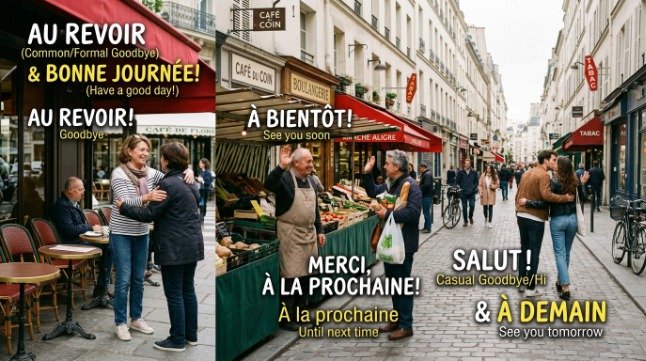
The most common French way to say goodbye is au revoir, but French has many other expressions. Some are formal, some are friendly, some are romantic, and others are perfect for casual conversations.
In this guide, you will discover useful “French goodbye” phrases for different situations, from quick everyday farewells to warm and emotional goodbyes.
Everyday French Ways to Say Goodbye 👋
These expressions work well in normal daily conversations. Use them with friends, classmates, coworkers, neighbors, or people you meet during the day.
- Au revoir — Goodbye
- Salut — Bye
- À bientôt — See you soon
- À plus tard — See you later
- À plus — See you
- À demain — See you tomorrow
- À tout à l’heure — See you later
- À la prochaine — Until next time
- Bonne journée — Have a good day
- Bonne soirée — Have a good evening
- Bon après-midi — Have a good afternoon
- Passe une bonne journée — Have a nice day
- Passe une bonne soirée — Have a nice evening
- Prenez soin de vous — Take care
- Prends soin de toi — Take care
- On se voit bientôt — See you soon
- On se retrouve bientôt — We will meet again soon
- On se voit plus tard — See you later
- On se retrouve demain — See you tomorrow
- À très bientôt — See you very soon
- À la prochaine fois — Until next time
- À demain matin — See you tomorrow morning
- À lundi — See you Monday
- À ce soir — See you tonight
- À tout de suite — See you in a moment
Au revoir is the safest choice when you are unsure. It is polite, natural, and widely understood.
French Goodbyes for Friends and Casual Conversations 😊
When speaking with friends, French speakers often use shorter and more relaxed expressions. These phrases feel friendly rather than formal.
- Salut, à plus
- Salut, à bientôt
- À plus tard
- À plus
- À toute
- À bientôt alors
- On se voit bientôt
- On se capte bientôt
- À la prochaine
- À demain
- À ce soir
- À tout
- Je file, à plus
- Je dois y aller, salut
- Bon, je te laisse
- Allez, salut
- Allez, à plus
- On se voit plus tard
- On se retrouve bientôt
- Passe une bonne journée
- Profite bien de ta journée
- Bonne soirée à toi
- Prends soin de toi
- À très vite
- On se retrouve bientôt
Salut is especially common among friends. It can mean both hello and goodbye, depending on the situation.
For a very casual conversation, à plus is also useful. It is similar to saying see you in English.
Funny, Cute, and Creative French Ways to Say Goodbye 😄🇫🇷
A goodbye does not always need to sound serious. With close friends, you can make your farewell playful, funny, or warm.
- Allez, je file
- Bon, je disparais
- Je m’éclipse
- Je prends la poudre d’escampette
- Allez, je dois filer
- Je vous laisse
- Je vous abandonne pour aujourd’hui
- Bon, à plus dans le bus
- À plus dans le métro
- À bientôt, j’espère
- À très vite
- Ne m’oublie pas
- À la prochaine aventure
- On se retrouve bientôt
- À plus, champion
- À plus, mon ami
- Allez, prends soin de toi
- Je file avant de changer d’avis
- Bon, je vais y aller
- Je disparais dans la nature
- Mission accomplie, à bientôt
- Je te laisse tranquille
- À plus, et pas de bêtises
- On se retrouve de l’autre côté
- À la prochaine, l’ami
For playful conversations, expressions like je file or je m’éclipse can make your goodbye feel more natural and lively.
Just remember that very creative expressions depend on the relationship. A joke that works with a close friend may sound strange in a formal conversation.
Short and Quick French Goodbye Phrases ⚡
Sometimes you need a simple goodbye without a long sentence. These short expressions are easy to remember and useful in everyday situations.
- Au revoir
- Salut
- À bientôt
- À plus
- À demain
- À plus tard
- À la prochaine
- À toute
- À ce soir
- À lundi
- À vendredi
- À tout de suite
- À très vite
- Bonne journée
- Bonne soirée
- Bon après-midi
- À bientôt alors
- Prends soin de toi
- Prenez soin de vous
- À la prochaine fois
- On se voit bientôt
- On se voit plus tard
- À demain matin
- À très bientôt
- Salut, à plus
If you want one phrase that works in almost every situation, choose au revoir.
If you are talking to a friend, salut or à plus can sound more relaxed.
Tips for Using French Goodbyes Naturally 💡
1. Match the phrase to the person
Use au revoir when you want to be polite and safe. Use salut with friends, family, and people you know well.
2. Think about the next meeting
Use à demain when you know you will see someone tomorrow. Use à bientôt when you expect to see them soon but do not know the exact time.
3. Keep casual phrases for casual settings
Expressions such as à plus and à toute are relaxed. They are better for friends and informal conversations than formal business situations.
4. Use polite expressions with strangers
When speaking to a customer, teacher, older person, or professional contact, au revoir is a reliable choice.
5. Do not worry about sounding perfect
French has many ways to say goodbye. Start with a few common phrases and use them often. As your French improves, you can add more natural expressions.
Conclusion
Learning the French way to say goodbye is about more than memorizing one translation. Au revoir is the most useful general expression, while salut, à plus, à bientôt, and à demain give you more choices for casual and specific situations.
The best phrase depends on who you are speaking to, how well you know them, and when you expect to meet again. Start with simple expressions and slowly add more natural French phrases to your vocabulary.
Which French goodbye phrase would you use first: au revoir, salut, or à bientôt?
Discover More Article
- 💛 What’s Another Way to Say Good Morning? Cute, Funny & Sweet Ideas (2026)
- Fancy Ways to Say Good Morning 🌅💫 (2026)
- ☀️ Different Way to Say Good Morning: Fresh Ideas (2026)

I am Rudyard Kipling, a passionate writer with 7 years of experience. I create engaging content on English grammar, writing tips, and unique language insights. Through my website, othirway.com, I aim to help readers improve their writing skills and explore creative ways to express themselves effectively.