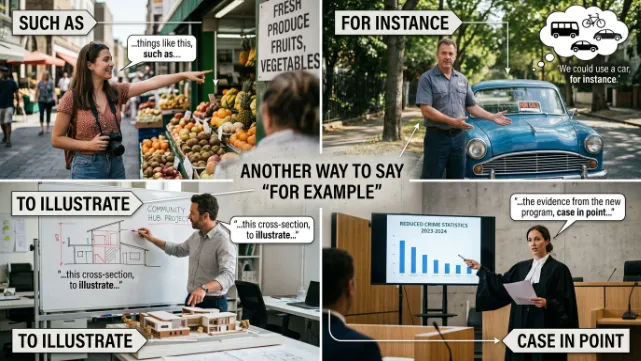
The phrase “for example” is one of the most common expressions in English. It helps explain ideas, introduce examples, and make your writing easier to understand. However, using the same phrase again and again can make your writing sound repetitive.
If you’re writing an email, school assignment, blog post, business report, or social media caption, knowing another way to say for example helps you sound more natural, professional, and engaging.
In this guide, you’ll discover over 80 alternatives to for example, organized by different situations. You’ll also learn when to use each expression so you can communicate with confidence.
Formal Alternatives to Say For Example
In professional writing, academic papers, business emails, and presentations, replacing “for example” with a more polished expression can improve your writing.
- For instance
- Such as
- To illustrate
- As an illustration
- As an example
- Consider
- Take
- Namely
- Specifically
- In particular
- One example is
- A good example is
- This includes
- As demonstrated by
- As shown by
- Among them
- Including
- One case is
- A clear example is
- To give an example
- As evidence
- In the case of
- As seen in
- As proof
- One illustration would be
When to Use These
These alternatives work well in:
- Business emails
- Academic writing
- Research papers
- Reports
- Presentations
- Professional blogs
Casual Ways to Say For Example
When chatting with friends or writing casual content, you can use friendlier expressions.
- Like
- Say
- Imagine
- Think about
- Picture this
- Let’s say
- Suppose
- One example
- Here’s one
- Check this out
- Take this
- For one
- One case
- Look at
- Consider this
- Think of
- A simple example
- Here’s an example
- Such as this
- One situation
- Something like
- Let’s look at
- Here’s a case
- A good one is
- One thing is
Best Situations
These phrases fit perfectly in:
- Conversations
- Text messages
- Blog posts
- Social media
- Friendly emails
- Storytelling
Creative and Engaging Ways to Say For Example
Want your writing to feel more interesting? These creative alternatives grab attention and make your examples feel fresh.
- Picture this
- Imagine this
- Here’s the fun part
- Think of it this way
- Let me paint a picture
- Let’s look closer
- Here’s a perfect case
- Consider this moment
- A classic example
- Here’s what I mean
- Let me explain
- Think about this
- Take this situation
- Let this sink in
- Here’s something similar
- Let’s explore one
- One real-life case
- This reminds me
- A simple illustration
- One memorable example
- Here’s a quick story
- Think of this scene
- Let’s break it down
- Here’s the idea
- One easy example
Great For
- Storytelling
- Speeches
- YouTube scripts
- Marketing
- Content writing
- Inspirational articles
Another Way to Say For Example in Academic Writing
Academic writing should be clear, formal, and easy to follow. Instead of repeating for example, use these alternatives to make essays, research papers, and assignments sound more polished.
- For instance
- To illustrate
- As an illustration
- Specifically
- Namely
- In particular
- Consider the case of
- One example is
- As demonstrated by
- As shown in
- As evidenced by
- This includes
- Such as
- A notable example is
- One illustration would be
- As can be seen in
- To demonstrate
- In the following case
- As proof
- A classic example is
- By way of example
- To clarify
- For purposes of illustration
- This can be observed in
- A practical example is
Another Way to Say For Example in Business and Workplace Communication
In business emails, meetings, and reports, using different expressions can make your communication sound more professional and engaging.
- For instance
- Such as
- Consider
- Take the case of
- One example is
- A good example is
- Specifically
- Namely
- This includes
- To illustrate
- As demonstrated by
- One scenario is
- In this case
- A practical example is
- As shown below
- Among others
- Including
- For comparison
- Let’s consider
- As evidence
- To clarify
- One situation is
- An example would be
- A real-world example is
- This can be seen in
Another Way to Say For Example in Everyday Conversations
When speaking with friends, family, or coworkers, simple and natural alternatives sound much better than repeating the same phrase.
- Like
- Say
- Let’s say
- Think about
- Imagine
- Picture this
- Here’s one
- Take this
- One example
- Consider this
- Think of
- Look at
- Here’s a case
- One situation
- Something like
- A good one is
- This is one
- Here’s what I mean
- Check this out
- Let me explain
- Suppose
- Think of this
- Here’s something similar
- Here’s an idea
- For one
Another Way to Say For Example in Creative Writing and Storytelling
Stories become more engaging when examples flow naturally. These alternatives help create vivid and interesting writing.
- Picture this
- Imagine this
- Think of it this way
- Here’s the scene
- Let’s imagine
- Consider this moment
- Here’s a perfect example
- Let me paint a picture
- Think about this
- Take this story
- Here’s what happened
- One memorable case
- A great illustration is
- This reminds me of
- Let’s explore this
- One classic example
- Here’s a real-life moment
- Think about the following
- Let’s dive into an example
- Here’s a simple illustration
- Imagine the situation
- Consider this example
- A perfect case is
- Let’s look at this
- Here’s the idea in action
Short Alternatives to Say For Example
Sometimes shorter is better. These quick alternatives save space while keeping your writing clear.
- Like
- Such as
- Say
- Namely
- Including
- Consider
- Take
- Instance
- Specifically
- Example
- One is
- Such
- Mainly
- Especially
- Including
- Case in point
- One case
- To illustrate
- For instance
- In particular
- As in
- Like this
These are excellent for:
- Notes
- Presentations
- Headlines
- Bullet lists
- Quick explanations
Tips for Using Alternatives to For Example
Using different expressions naturally makes your writing smoother. Keep these simple tips in mind.
- Match the phrase with your audience. Formal readers expect professional words, while friends appreciate casual language.
- Avoid using the same alternative repeatedly in one paragraph.
- Choose short expressions for quick writing and longer ones for detailed explanations.
- Read your sentence aloud to make sure it sounds natural.
- Use examples only when they add value and help readers understand your point.
Conclusion
Learning another way to say for example helps you write with more variety and confidence. If you’re preparing a business report, writing an essay, creating a blog, or chatting online, using different expressions keeps your language fresh and engaging.
Try mixing formal, casual, creative, and short alternatives depending on the situation. The right phrase can make your ideas clearer and your writing more enjoyable to read.
Which alternative do you use most often? Try using a few new ones in your next conversation or writing project and see the difference.
Discover More Article
- 🚀 Another Way to Say Say Like a Pro with Easy Synonyms (2026)
- ❤️ Another Way to Say Relationship: Smart Alternatives You’ll Love (2026)
- Another Way to Say Mother ✨ The Best Loving and Creative Names to Use (2026)

I am Aldous Huxley, a passionate writer with 4 years of experience. I create insightful content on English grammar, writing tips, and alternative approaches at othirway.com. My goal is to help readers improve their language skills and explore new ways of expressing themselves clearly and effectively.