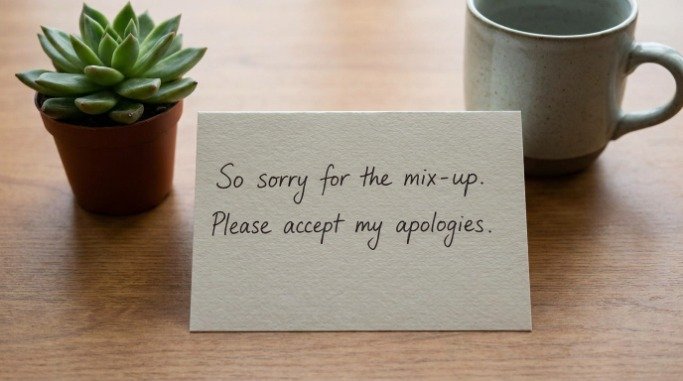
Saying “sorry” is not always easy. Sometimes, a simple sorry may feel too short, too casual, or not strong enough for the situation. Knowing a polite way to say sorry can help you show respect, take responsibility, and repair a relationship.
A good apology does more than admit a mistake. It can show that you care about the other person’s feelings. It can also help reduce tension at work, with friends, with family, or in everyday conversations.
The right words depend on the situation. You may need a formal apology for your boss, a warm apology for a friend, or a short message for a quick mistake. Below are useful ways to say sorry in different situations.
Polite Ways to Say Sorry in Everyday Conversations
Everyday mistakes happen. You may interrupt someone, forget something, arrive late, or say something without thinking. In these moments, a polite apology can keep the conversation friendly.
- I am sorry about that.
- I sincerely apologize.
- Please accept my apology.
- I apologize for my mistake.
- I am sorry for the misunderstanding.
- I did not mean to cause any trouble.
- I am sorry if I upset you.
- I hope you can forgive me.
- I apologize for the confusion.
- I am sorry for the inconvenience.
- I should have been more careful.
- I take responsibility for my mistake.
- I am sorry for what happened.
- I regret making that mistake.
- I truly apologize for my actions.
- I hope you understand.
- I am sorry for putting you in that position.
- I did not intend to hurt you.
- Thank you for being patient with me.
- I appreciate your understanding.
- I am sorry for the trouble I caused.
- I should have handled things better.
- I apologize for not thinking it through.
- I am sorry that things went wrong.
- I will be more careful next time.
These phrases work well because they sound respectful without being too formal. Choose one that matches the seriousness of your mistake.
Polite Ways to Say Sorry at Work or in Professional Settings
Workplace apologies should sound calm and professional. You do not need to use big words. A clear apology shows that you understand the problem and are willing to fix it.
Try these professional options:
- I sincerely apologize for the delay.
- Please accept my sincere apology.
- I apologize for the inconvenience caused.
- I am sorry for the oversight.
- I apologize for the misunderstanding.
- I take full responsibility for the error.
- I am sorry for missing the deadline.
- I apologize for the confusion this caused.
- I regret the mistake and will correct it.
- I am sorry for any inconvenience this may have caused.
- I should have checked the details more carefully.
- I apologize for not responding sooner.
- I am sorry for the delay in getting back to you.
- Thank you for your patience and understanding.
- I apologize for the incorrect information.
- I regret the error and appreciate your understanding.
- I am sorry for any disruption this caused.
- I should have handled this more carefully.
- I apologize for the oversight on my part.
- I am sorry for the misunderstanding between us.
- I take responsibility and will work to resolve this.
- I apologize for not meeting your expectations.
- I am sorry that I did not communicate this clearly.
- Please accept my apologies for the inconvenience.
- I appreciate your patience while I work to fix this.
In a professional setting, avoid making excuses. A strong apology should focus on the mistake, show responsibility, and explain how you will make things better.
Funny, Warm, and Emotional Ways to Say Sorry
Sometimes a serious apology is needed. Other times, a little humor or warmth can make the moment easier. This works best with people who know you well and understand your sense of humor.
- My bad, and I truly mean it.
- I owe you a big apology.
- I messed up, and I am sorry.
- My brain clearly took the day off.
- I made a mistake, and I feel terrible about it.
- Please forgive my moment of poor judgment.
- I officially admit that I was wrong.
- I messed that one up badly.
- I wish I could rewind that moment.
- I owe you an apology and probably a coffee.
- I am sorry for being a little careless.
- My mistake got the better of me this time.
- I should have known better.
- I really hope you can forgive me.
- I am sorry from the bottom of my heart.
- I hate that I hurt your feelings.
- I never wanted to make you feel that way.
- I wish I had handled things differently.
- You did not deserve that from me.
- I am truly sorry for hurting you.
- I care about you, and I regret what I did.
- I hope my actions can show you how sorry I am.
- I know I made things harder for you, and I am sorry.
- I would take it back if I could.
- I am sorry, and I promise to learn from this.
Humor should be used with care. If someone is deeply hurt, avoid jokes. A warm and honest apology is usually the better choice.
Short and Simple Ways to Say Sorry
Sometimes you do not need a long apology. A short message can be enough when the mistake is small or when you want to respond quickly.
- Sorry about that.
- I am sorry.
- My apologies.
- Please forgive me.
- I apologize.
- Sorry for the mistake.
- Sorry for the delay.
- Sorry for the confusion.
- Sorry about the mix-up.
- I truly apologize.
- I am really sorry.
- Please accept my apology.
- I regret that.
- That was my mistake.
- I was wrong.
- I should have known better.
- I did not mean that.
- I did not mean to hurt you.
- Sorry for the trouble.
- Sorry for the inconvenience.
- I hope you can forgive me.
- I take responsibility.
- I will do better.
- I will make it right.
- Thank you for understanding.
Short apologies are useful in texts, chats, emails, and quick conversations. However, when the mistake is serious, add a little more detail so the other person knows that you truly understand what happened.
Tips for Saying Sorry the Right Way
A good apology is not only about choosing the right words. Your tone, timing, and actions also matter.
1. Match Your Apology to the Situation
A small mistake may only need a quick sorry. A serious mistake may need a thoughtful and honest apology. Do not use the same words for every situation.
2. Take Responsibility
Avoid putting the blame on someone else. Instead of saying that you are sorry they felt upset, explain what you did and accept responsibility.
3. Do Not Over-Explain
Too many excuses can make an apology sound weak. Keep your message clear and focus on making things better.
4. Give the Person Time
Some people need time before they are ready to accept an apology. If emotions are high, give them space instead of forcing an immediate response.
5. Let Your Actions Support Your Words
The best apology is followed by better behavior. If you made the same mistake several times, show that you are working to change it.
Conclusion
Knowing a polite way to say sorry can help you handle difficult moments with respect and confidence. The best apology depends on the situation. A professional mistake may need a formal apology, while a small mistake with a friend may only need a simple and warm message.
The key is to be honest, take responsibility, and choose words that fit the person and situation. Most importantly, let your actions support your apology.
Which apology style do you use most often: formal, friendly, emotional, or short and simple?
Discover More Article
- Powerful Ways to Say I’m Proud of You ❤️ (2026)
- Another Ways to Say Thinking of You ❤️ Make Your Message Special (2026)
- Another Way to Say I Miss You 💕 Heartfelt Expressions (2026)

I am Aldous Huxley, a passionate writer with 4 years of experience. I create insightful content on English grammar, writing tips, and alternative approaches at othirway.com. My goal is to help readers improve their language skills and explore new ways of expressing themselves clearly and effectively.